Lesson 1: Proper position of the body, hands, and fingers
The sound on the piano doesn’t come only from the fingers, but from the weight of the hand and body. That’s why it’s important for the body to be properly positioned. Proper posture at the piano involves sitting relaxed and stable, with a straight back and feet firmly on the floor. The arms hang naturally, the wrists are flexible, and the fingers are slightly curved, playing with the fingertips. The goal is ease of movement, control, and avoiding tension.
About this lesson
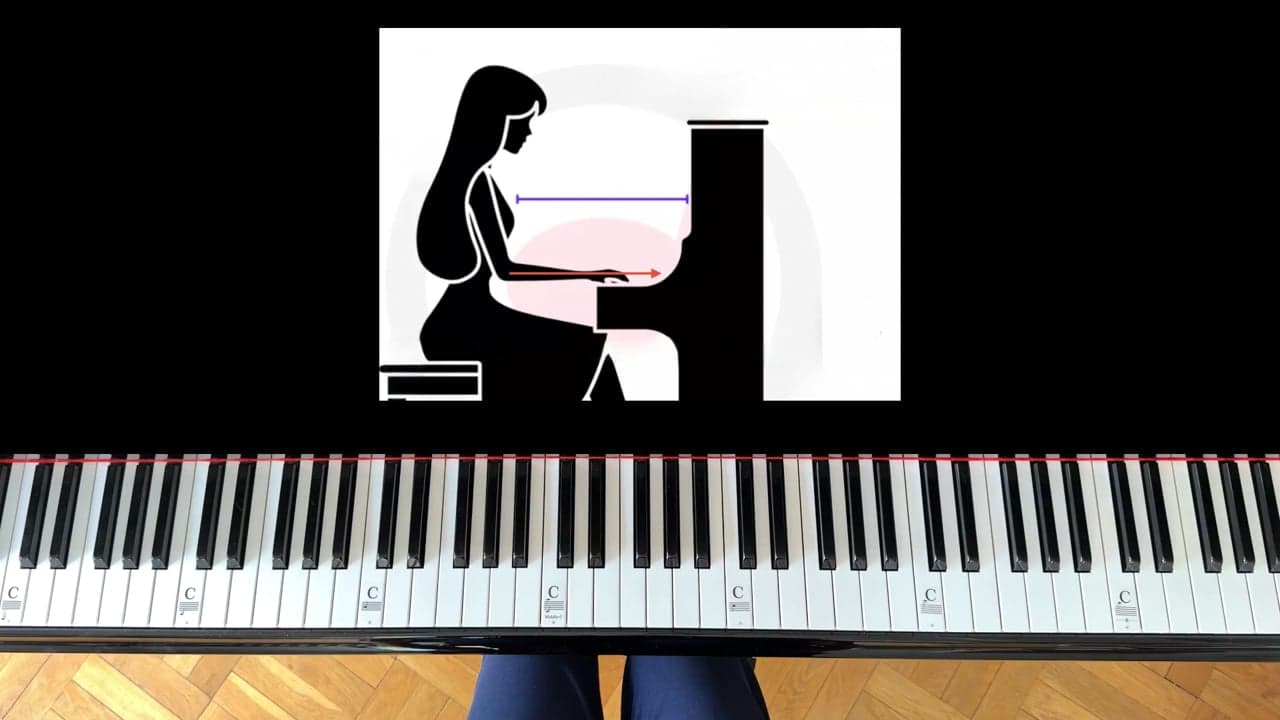
Proper body posture at the piano is the foundation of good technique and long-term progress. Sitting should be stable and relaxed—position yourself on the front half of the bench, with a straight back...
Proper body posture at the piano is the foundation of good technique and long-term progress. Sitting should be stable and relaxed—position yourself on the front half of the bench, with a straight back and a slight forward lean. Your feet should rest firmly on the floor, and the bench height should be adjusted so that your forearms are approximately parallel to the ground or slightly angled downward toward the keys.
The arms should be relaxed and naturally lowered from the shoulders, without lifting or tension. The elbows are slightly away from the body, allowing free movement across the keyboard. The wrists should be flexible and aligned with the forearms, without "collapsing" or being raised too high.
The fingers are slightly curved, as if holding a small ball. Each finger touches the key with its tip, and the movement comes from the whole arm, not just the fingers. It is important to maintain control and balance in every tone, with minimal tension. The thumb and little finger, in particular, should remain stable, without twisting the hand.
The goal of proper posture is to enable ease of playing, precision, and the prevention of injuries, while maintaining maximum control over the sound.